Humanoid robots explained: what they are actually good for in 2026
Updated 2026-10 · RobotMarket editorial
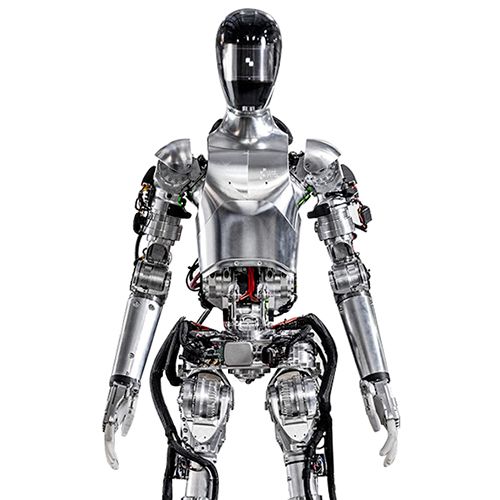
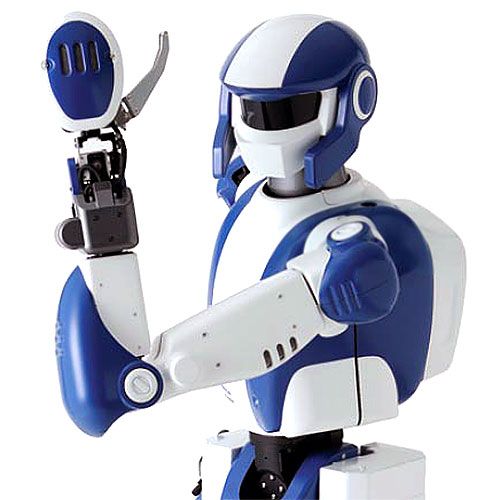
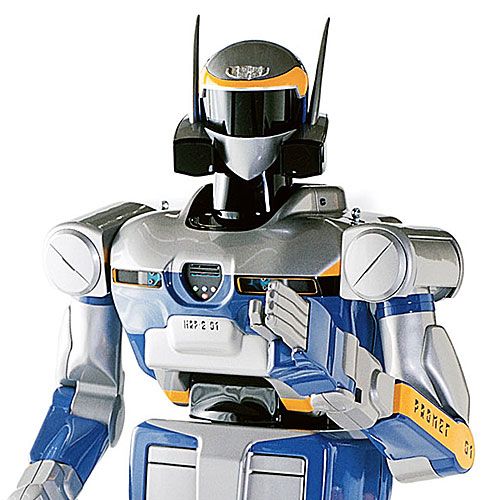
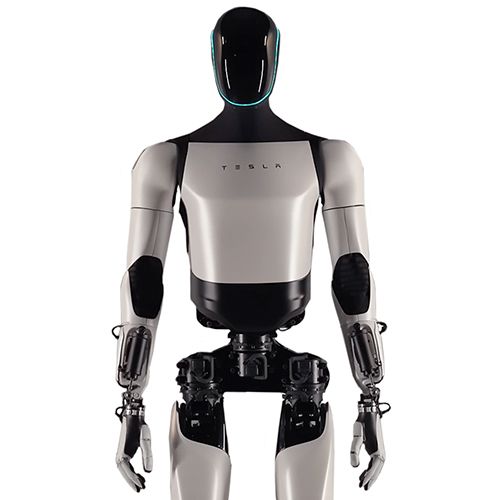
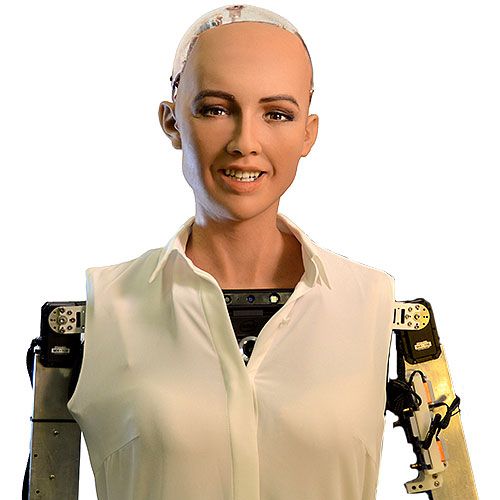
A humanoid robot is built to work in a world designed for human bodies: staircases, door handles, shelves at chest height, factory floors laid out around people. That single design choice is both its appeal and its hardest problem.
Why the humanoid shape at all?
If you rebuild the environment instead of the robot, you get a warehouse — flat, tidy, predictable, and already served by wheeled AMRs. Humanoids make sense precisely where you cannot rebuild: existing homes, hospitals, construction sites and factories. A humanoid is a bet that adapting the robot to the world is cheaper than adapting the world to the robot.
What they can do today
Reliably: walk on flat and moderately rough ground, carry light loads, perform scripted manipulation, and — with teleoperation — do almost anything a human can. Less reliably: autonomously manipulate unknown objects, recover from a fall, or run a full shift without supervision. Battery life is the boring constraint that decides most deployments: most humanoids we track run for 1–5 hours.
The price collapse
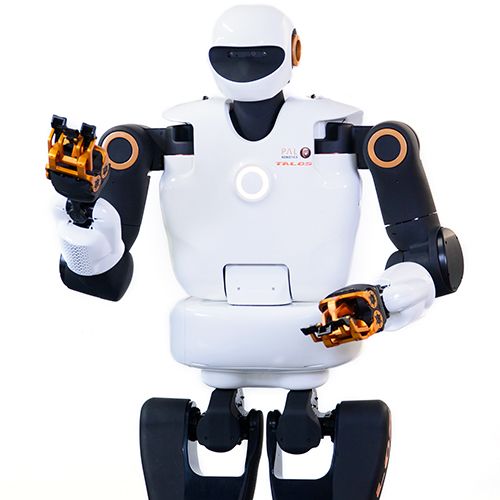
The headline of the last two years is price. The Unitree R1 launched under $5,000; the H2 undercut Unitree's own H1 by two-thirds in a single generation. Meanwhile research platforms like PAL Robotics' TALOS remain six-figure tools. The market has split into accessible developer humanoids and industrial research platforms, with very little in between.